In an education system often dominated by standardized tests and rigid curricula, the arts offer something invaluable: a pathway to deeper understanding, creative expression, and innovative thinking. At Maple Leaf International School, we don't view arts education as a luxury or an afterthought—it's a fundamental component of how we teach and how our students learn.
Beyond Creating Artists
When people think about arts in education, they often imagine training future painters, musicians, or actors. While we certainly celebrate and nurture artistic talent, the true power of arts integration extends far beyond producing professional artists. The skills developed through artistic practice—creativity, critical thinking, problem-solving, collaboration, and persistence—are essential for success in any field.
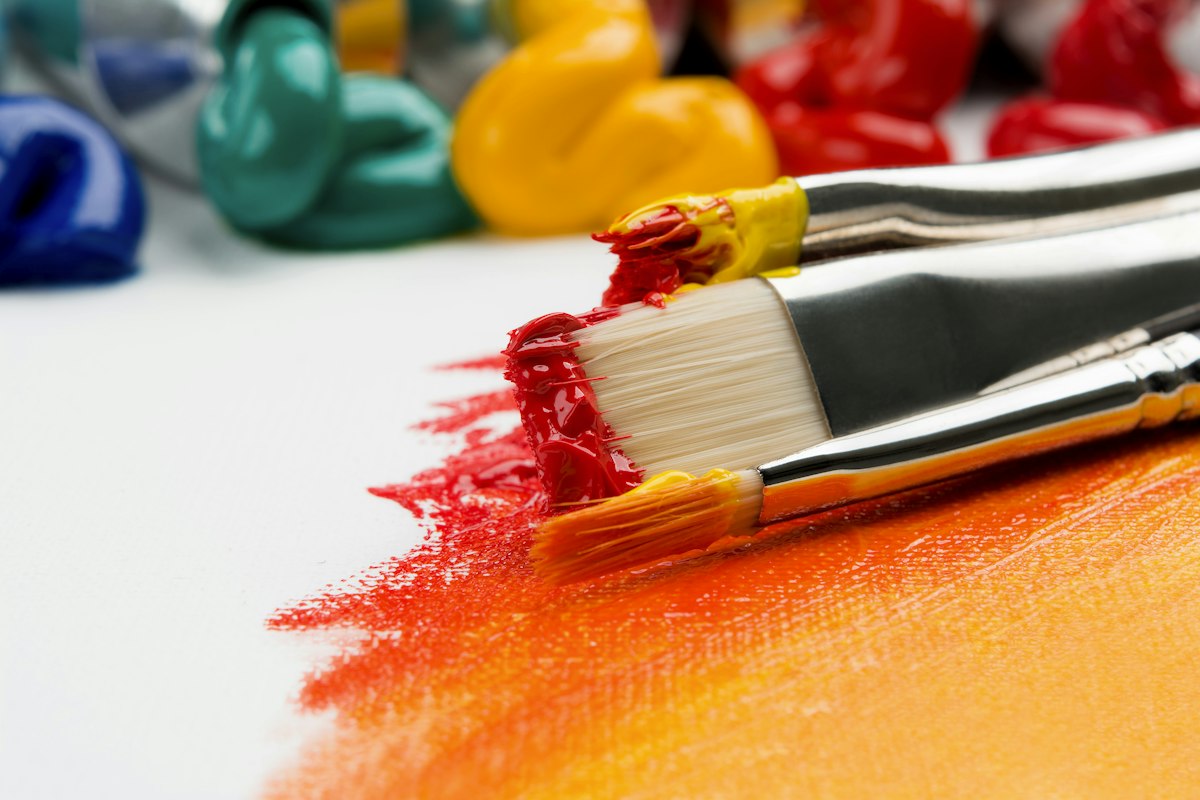
Consider a student working on a painting. They must plan their composition, mix colors to achieve desired effects, adjust their approach based on results, and persist through challenges. These same skills apply whether they're solving a mathematical equation, conducting a scientific experiment, or writing a persuasive essay. The arts teach students how to think, not just what to think.
"The arts are not a distraction from 'real learning'—they are a vehicle for deeper understanding across all disciplines. When students engage creatively, they remember, connect, and apply knowledge in ways that passive learning simply cannot achieve." - Elena Rodriguez, Language Arts Coordinator
The Science of Creative Learning
Research in neuroscience and education supports what artists and creative teachers have long known intuitively: engaging with the arts changes how our brains process information. When students participate in music, visual arts, drama, or dance, they activate multiple neural pathways simultaneously, creating stronger and more versatile cognitive connections.
Studies have shown that students who engage regularly with the arts demonstrate improved performance in mathematics, reading, and critical thinking. They also show enhanced spatial reasoning, better memory retention, and superior ability to analyze complex problems. The arts literally rewire the brain for learning.
Arts Integration in Practice
Visual Arts and Mathematics
In our integrated curriculum, students might explore geometric concepts by studying Islamic art patterns, or learn about fractions and ratios through mixing paint colors. They create three-dimensional sculptures to understand volume and surface area, making abstract mathematical concepts tangible and memorable.
Drama and Language Arts
Acting out scenes from literature helps students deeply understand character motivation, plot structure, and thematic elements. When students embody a character, they don't just read about empathy—they practice it. They learn to analyze text for subtext, interpret multiple perspectives, and communicate meaning through gesture, voice, and expression.
Music and Science
Music provides a perfect gateway to understanding physics concepts like frequency, wavelength, and resonance. Students build instruments to explore how sound is produced and travels. They analyze the mathematical patterns in musical compositions, discovering connections between rhythm, harmony, and numerical relationships.
Dance and Physical Education
Dance teaches body awareness, spatial relationships, and physics concepts like momentum and force. Students learn to control their movements with precision, work collaboratively in choreographed pieces, and express emotions and ideas through physical movement. These kinesthetic learning experiences are especially powerful for students who struggle with traditional verbal or written instruction.
Developing 21st Century Skills
The skills that employers consistently identify as most valuable—creativity, collaboration, communication, and critical thinking—are precisely what the arts develop. When students work on a group mural, put on a theatrical performance, or compose music together, they're learning to:
- Generate and evaluate ideas: Creative projects require brainstorming, experimentation, and refinement—skills essential for innovation in any field.
- Collaborate effectively: Ensemble performances and collaborative art projects teach students to negotiate, compromise, and build on each other's ideas.
- Communicate powerfully: The arts provide multiple channels for expression, helping students discover their voice and convey complex ideas to diverse audiences.
- Embrace ambiguity: Artistic processes rarely have single correct answers, preparing students for the complexity and uncertainty of real-world challenges.
- Persist through challenges: Creating art requires revision, failure, and perseverance—developing the resilience students need for any difficult endeavor.
Emotional Intelligence and Well-Being
Beyond cognitive benefits, the arts play a crucial role in emotional development and mental health. Creative expression provides students with healthy outlets for processing emotions, building self-awareness, and developing confidence. In our increasingly stressful world, these emotional regulation skills are more important than ever.
Students who participate in arts programs report higher levels of engagement, motivation, and satisfaction with school. They develop stronger self-identity and greater confidence in their abilities. The arts create space for students to explore who they are and who they want to become.
Our Commitment to Arts Integration
At Maple Leaf International School, arts integration isn't an occasional special event—it's woven into the fabric of our daily instruction across all grade levels and subjects. Our dedicated arts facilities include:
- Spacious visual arts studios with professional-grade materials and equipment
- A state-of-the-art theater with stage lighting and sound systems
- Music rooms equipped with acoustic and digital instruments
- Dance and movement studios with proper flooring and mirrors
- Digital arts labs with design software and creative technology
More importantly, our teachers receive ongoing professional development in arts integration strategies, ensuring that creative approaches to learning are embedded throughout our curriculum, not isolated to dedicated arts classes.
Preparing Creative Thinkers for Tomorrow
As automation and artificial intelligence transform the job market, the uniquely human capacity for creativity becomes increasingly valuable. The problems our students will face in their careers and lives will require innovative solutions, not rote application of memorized procedures.
By prioritizing arts integration, we're not preparing students for the world as it is—we're preparing them to imagine and create the world as it could be. We're developing flexible thinkers who can approach problems from multiple angles, generate novel solutions, and adapt to rapidly changing circumstances.
Conclusion
Learning through creativity isn't a departure from academic rigor—it's a path to deeper, more meaningful learning. When students engage their creative capacities, they don't just learn content; they learn how to learn. They develop the cognitive flexibility, emotional intelligence, and innovative thinking that will serve them throughout their lives.
At Maple Leaf International School, we're committed to nurturing the whole child—head, heart, and hands. Through arts integration, we create learning experiences that are not only more effective but also more joyful, more meaningful, and more human. Because in the end, education isn't just about preparing students for tests—it's about preparing them for life.